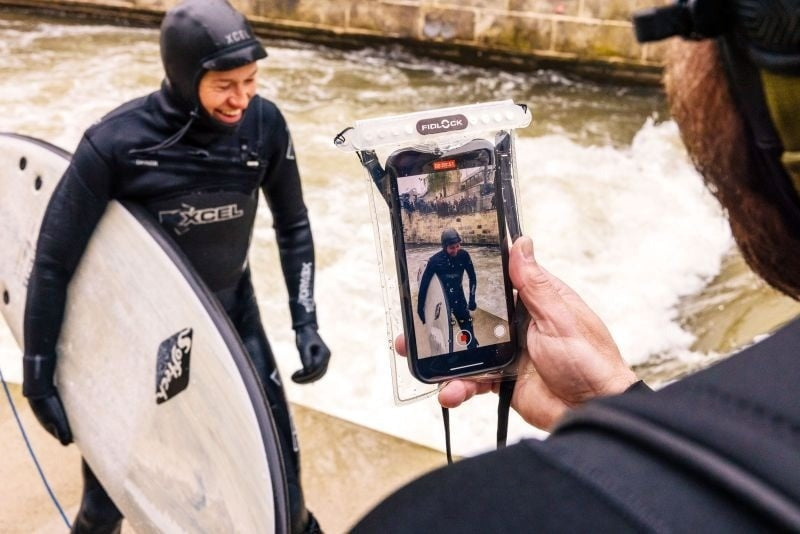
Sunny October day, offshore wind, clean lines on the surf cam. From the Boulevard it feels like summer, but after twenty minutes in your 3/2 your hands stop cooperating. Summer wetsuit or winter wetsuit? At the North Sea you don't choose by the calendar, but by the water temperature: a 3/2 mm at 16–22°C, a 4/3 mm at 10–15°C and a 5/4 mm below 10°C. Below you will read what really makes the suits different, when you wear which suit and whether you need one or two.
Quick answer: a summer wetsuit is a 3/2 mm suit for water of 16–22°C, roughly June through September at the North Sea. A winter wetsuit is a 4/3 mm (10–15°C, spring and autumn) or a 5/4 mm (below 10°C, December through March), with glued and blind-stitched seams, a chest zip, thermal lining and boots, gloves and cap included.
What is the difference between a summer wetsuit and a winter wetsuit?
The difference lies in four things: thickness, seams, closure and lining. A summer wetsuit is 3/2 mm thick (3 mm on the torso, 2 mm on arms and legs), often has flat-stitched seams and a back zip, and is built for freedom of movement. A winter wetsuit is 4/3 or 5/4 mm, has glued and blind-stitched or taped seams, usually a chest zip and a thermal lining that retains heat.
Thickness is the first thing everyone looks at, but not the only thing that counts. A cheap 5/4 with stitched seams where water flows through, is colder in January than a good 4/3 with sealed seams and a warm lining.
Comparison: summer wetsuit versus winter wetsuit
The temperatures are our guidelines for the North Sea at Scheveningen; if you get cold quickly, move up one step warmer.
| Summer wetsuit | Winter wetsuit | |
|---|---|---|
| Thickness | 3/2 mm (sometimes shorty or springsuit in warm, still weather) | 4/3 mm or 5/4 mm |
| Seams | Flat-stitched (flatlock) or glued and blind-stitched in better suits | Glued and blind-stitched (GBS), often extra taped or liquid seal |
| Zip | Back zip or chest zip; back zip is easier to put on | Chest zip (or zipless): less cold water inside |
| Lining | Thin, quick-drying | Thermal lining on torso and often also legs |
| Water temperature | 16–22°C | 4/3: 10–15°C · 5/4: below 10°C |
| North Sea season | Roughly June through September | 4/3: April–May and October–November · 5/4: December through March |
| Accessories | Usually nothing; possibly thin boots against shells | Boots 5 mm, gloves 3–5 mm, cap or hood |
| Feel | Light, flexible, little resistance when paddling | Warmer, slightly more resistance; modern suits are much more flexible than before |
When do you choose a summer wetsuit (3/2 mm)?
You choose a summer wetsuit of 3/2 mm as soon as the seawater gets above 16°C, at our coast usually from June through September. You get maximum freedom of movement: less resistance when paddling, a more flexible pop-up and a suit you have on in a minute. For beginners that is a win, because surfing already asks enough of your coordination.
A shorty or springsuit works in really warm and still weather, for a short session or SUPing. For surfing on the Dutch coast a full 3/2 suit is almost always more versatile: wind cools you down faster than you think, especially when you are lying waiting for a set.
At our surf lessons you get a 3/2 from the surf school in the summer; wetsuit and softtop are included in every lesson. Want to feel what a thickness does first before you buy? Then rent one via our wetsuit rental.
When do you need a winter wetsuit (4/3 or 5/4 mm)?
You need a winter wetsuit as soon as the water drops below 16°C. Between 10 and 15°C, in the spring and autumn, a 4/3 mm suffices for most surfers. If the North Sea drops below 10°C, roughly December through March, then you want a 5/4 mm with chest zip, sealed seams and thermal lining. Then you stay sharp for an hour and a half instead of shivering to the shore after thirty minutes.
With a winter suit pay extra attention to the details. A chest zip seals better than a back zip and limits the flush of cold water. Snug wrists, ankles and a collar that fits well around your neck are no luxury: through every gap cold water continuously flows in. What the crew sees every winter: who buys a good suit already in November, surfs the best waves of the year; who waits, skips January.
Boots, gloves and cap: belong with it
From a water temperature of about 15°C you start wearing boots; below 10°C gloves and a cap or hood come along. You lose a lot of heat through head, hands and feet, and with cold hands paddling becomes hard and your pop-up sloppy. Choose accessories that fit tightly without pinching, and preferably try them on together with your suit.
One wetsuit or two?
If you only surf in the summer, then one good 3/2 mm is enough. If you surf from March to November, then a 4/3 mm is the best single choice: fresh in July, but doable, and warm enough in the autumn. If you want to surf 365 days a year, then the combination 3/2 + 5/4 works best; a 4/3 as only suit is then too warm in August and too cold in February.
Most of our students who continue after a summer, buy a 4/3 first and only the next year a 5/4 or a 3/2. That is a great order: you learn what your own cold sensitivity is before you buy a second suit. Which size and which brand you choose, read step by step in the wetsuit buying guide; if you want to know everything about surfing in the cold months, then the winter wetsuit guide is your next stop.
Fit comes before an extra millimeter
A wetsuit should fit tight without restricting your breathing. Dry neoprene often feels too tight in the shop; in the water it shapes itself to your body. Folds at lower back, shoulders or knee holes let water flow through. A too large 5/4 is colder than a well fitting 4/3.
Brands fall differently. In the surf shop in the harbor (Vissershavenweg 55b) O'Neill, Rip Curl, Quiksilver, Billabong, Xcel, C-Skins, Roxy, Vissla and SRFACE hang next to each other, and the shop team surfs all year round themselves. Feel free to try on three; that quarter of an hour saves you cold sessions for a winter. Prefer to order online? View all wetsuits in the webshop, sorted by thickness, and if you doubt between two sizes, call or email us.
Shop wetsuits → Rent a wetsuit →
Frequently asked questions
Which wetsuit do I need for the North Sea?
Look at the water temperature: 3/2 mm at 16–22°C (summer), 4/3 mm at 10–15°C (spring and autumn) and 5/4 mm below 10°C (winter). If you get cold quickly or lie waiting a lot, choose one step warmer.
Can I surf all year with a 4/3?
From about March to November yes, with boots in the cold months. In December through March, when the North Sea drops below 10°C, a 5/4 mm with gloves and cap is a lot more comfortable and safer.
Is a chest zip better than a back zip?
For cold water yes: a chest zip lets less water in and gives more flexibility in your back. A back zip is easier to put on and take off and perfect for a summer wetsuit.
Do I get a wetsuit with a surf lesson?
Yes. At every lesson from Hart Beach a wetsuit in the right thickness for the season is included, just like a softtop. After, you shower warm in our private changing rooms.
How long does a wetsuit last?
With good maintenance (rinse with fresh water after every session, dry inside out out of the sun, not on a thin hanger) a suit easily lasts multiple seasons. A winter suit that you use intensively loses its heat earlier than a summer suit.
Check the water temperature, put on the suit that keeps you in the water longer and go surfing. Surf four seasons, also in February.